Asset Utilization
What is Asset Utilization?
Asset utilization refers to measuring how effectively an organization uses its IT assets to support business operations. It indicates whether assets such as hardware, software, and IT infrastructure are being used to their full potential and are delivering value or if they are underutilized. High asset utilization indicates that resources are being used to their full potential, while low utilization may signal inefficiencies, underuse, or wasted investment. Proper utilization can lead to cost savings, better IT governance, and increased operational efficiency.
Why is Asset Utilization Important in ITAM?
Effective IT Asset Management (ITAM) relies on asset utilization data to optimize resource allocation, reduce costs, enhance security, and ensure compliance. Tracking asset utilization provides valuable insights into:
- Cost Efficiency – Reduces unnecessary purchases by ensuring existing assets are maximized. Proper utilization tracking prevents overspending on new equipment by reallocating underused assets where needed.
- Lifecycle Management – Identifies when assets are nearing obsolescence or redundancy. Regular utilization reviews help determine when assets should be upgraded, redeployed, or retired to maintain efficiency.
- Compliance and Security – Ensures devices and software are properly accounted for and secured. Underutilized or unmanaged assets can pose security risks, while improper tracking can lead to software license violations.
- Operational Productivity – Prevents bottlenecks by ensuring essential IT resources are available where needed. Proper utilization management ensures employees have access to the right tools at the right time, improving workflow and minimizing downtime.
How to Calculate Asset Utilization?
Asset utilization is typically expressed as a percentage, comparing the actual usage of an asset against its total available capacity. The formula varies depending on the type of asset but generally follows:
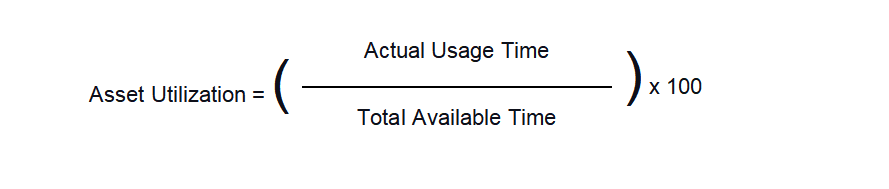
This percentage helps IT teams assess whether assets are optimally deployed, overused, or underutilized.
When calculating software utilization, organizations may track:
- Active Usage Time – The duration a software license is actively used.
- Number of Users – The count of employees utilizing a specific software.
- Session Durations – How long users engage with the software in a given period.
Key Metrics for Measuring Asset Utilization
Measuring asset utilization involves various metrics, including:
- Utilization Rate (%): The percentage of time an asset is actively used.
- Idle Time: The duration an asset remains unused.
- Deployment vs. Usage: Number of assets deployed versus those actively in use.
- User-to-Asset Ratio: The number of employees per asset type.
- Asset Downtime: The frequency and duration that an asset is non-operational due to maintenance or failure.
- Mean Time Between Failures (MTBF): The average time between asset failures, indicating reliability.
- Mean Time to Repair (MTTR): The time required to fix an asset, affecting operational efficiency.
- Cost per Use: The total cost of ownership (TCO) divided by the number of uses.
- Return on Investment (ROI): How much value an asset generates relative to its cost.
Improving Asset Utilization Efficiency
Maximizing IT asset utilization requires a strategic approach to prevent waste and ensure resources are used effectively. Regular audits help identify underutilized assets, allowing redistribution, repurposing, or decommissioning. Rightsizing inventory ensures assets align with actual usage, avoiding excess and shortages.
Technology plays a key role in improving efficiency. IT asset management (ITAM) software provides real-time tracking, optimizing asset allocation, and reducing manual errors. Proactive maintenance schedules based on usage data help minimize downtime and extend asset lifespan. Strategic redeployment further ensures that idle assets are reassigned to areas of higher demand.
Employee training is also essential—staff must understand how to use available resources to prevent unnecessary asset requests. Virtualization and cloud solutions enhance flexibility, reducing reliance on physical hardware while improving cost efficiency. Enforcing governance policies prevents shadow IT and ensures compliance with licensing agreements.
Factors Affecting Asset Utilization
Several challenges impact how effectively IT assets are used within an organization. Understanding these factors helps identify inefficiencies and develop targeted strategies for improvement.
- Workload Distribution – Unequal allocation of assets can result in some being overused while others remain idle, leading to inefficiencies and increased maintenance costs.
- Technology Obsolescence – Older assets may not meet current performance standards, leading to reduced adoption and underutilization.
- Inadequate Asset Tracking – A lack of visibility due to inaccurate data, poor tracking methods, or decentralized records makes it difficult to determine asset utilization and reallocate resources efficiently.
- Maintenance Downtime – Unscheduled repairs or inefficient maintenance schedules reduce the availability of critical IT assets.
- Overprovisioning and Underprovisioning – Excess inventory leads to unnecessary costs, while insufficient assets create bottlenecks that slow operations.
- Shadow IT and Unauthorized Usage – Employees using unapproved software or devices contribute to untracked utilization, leading to security risks and compliance issues.
- Remote vs. Onsite Work Policies – The shift to hybrid or remote work has changed how IT assets are used, sometimes leading to underutilization of office-based resources.
- Redundant Assets – Outdated or surplus equipment takes up space and adds to operational inefficiencies without providing value.
Asset Utilization vs. Asset Performance
Although related, asset utilization and asset performance measure different aspects:
Asset Utilization focuses on how often and efficiently an asset is used.
Asset Performance assesses the effectiveness, speed, and reliability of an asset in fulfilling its intended purpose.
Common Scenarios:
- High utilization but low performance can indicate an asset is overworked and requires upgrades.
- Low utilization but high performance may suggest the asset is capable but not assigned efficiently.
- Balanced utilization and performance ensure both operational efficiency and longevity.
Common Challenges in Asset Utilization Tracking
Organizations often face several obstacles when tracking asset utilization effectively. Inconsistent tracking methods and a lack of standardized metrics can lead to discrepancies in reporting, making it difficult to gain accurate insights. Different teams may define utilization in varying ways, leading to inconsistencies in asset management practices. Additionally, data inaccuracy—caused by incomplete, outdated, or manually entered records—can result in misleading utilization insights, preventing organizations from making informed decisions.
Shadow IT further complicates tracking efforts, as employees using unauthorized devices or software create gaps in utilization data and potential security risks. Software licensing complexity is another challenge, as organizations must balance compliance with optimizing software usage. Without proper tracking, companies risk over-licensing (leading to wasted costs) or under-licensing (which can result in compliance violations).
Budget constraints can limit an organization’s ability to invest in robust IT asset management (ITAM) tools, leading to inefficient tracking and underutilized resources. Additionally, asset hoarding—where employees hold onto IT assets that are no longer needed—reduces overall availability and increases costs. Addressing these challenges requires implementing standardized tracking systems, enforcing IT policies, and leveraging automation tools to improve visibility and accuracy.
Technology and Tools for Tracking Asset Utilization
Optimizing asset utilization requires the right technology to track, analyze, and manage IT resources effectively. Several tools help organizations measure and improve utilization:
- IT Asset Management (ITAM) Software: Solutions like Teqtivity provide real-time tracking, usage analytics, and reporting to help organizations optimize IT assets.
- Enterprise Resource Planning (ERP) Systems: Integrate asset tracking with financial and operational planning to better allocate resources.
- AI & IoT Sensors: Track usage patterns and performance of physical assets, helping IT teams monitor utilization and prevent inefficiencies.
- Mobile Device Management (MDM): This function ensures that company-issued mobile devices are properly managed and utilized, especially in remote work environments.
- Barcode and RFID Tracking: Enhances the visibility and tracking of IT assets across multiple locations, reducing losses and inefficiencies.
- Cloud-Based Asset Monitoring – Monitors virtualized environments and software usage, ensuring proper license management and cloud resource optimization.
With Teqtivity’s comprehensive ITAM solutions, businesses gain real-time insights into asset utilization, helping them reduce costs, eliminate inefficiencies, and maximize IT investments. Contact us today to learn how Teqtivity can help you take control of your IT assets and improve operational efficiency.
Glossary of Related Terms
- Access Control
- API
- Configuration Management Database (CMDB)
- Integration
- Internet of Things (IoT)
- Inventory Management
- Loaner Asset
- Personal Device
- Risk Avoidance
- Serial Number
- Software Asset Management (SAM)
Frequently Asked Questions
-
How can I determine if an asset is underutilized?
-
Compare its usage rate against industry benchmarks and operational needs. If it falls below a certain threshold (e.g., 40%), consider redeployment or decommissioning.
-
What is the ideal asset utilization rate?
-
There’s no universal benchmark, but assets should be neither overworked nor left idle. Many organizations aim for 70-90% utilization for IT hardware.
-
How does asset utilization impact IT budgeting?
-
Proper utilization ensures that budgets are allocated efficiently, preventing overspending on new assets when existing ones are underutilized.
-
Can software assets also be tracked for utilization?
-
Yes. Many ITAM tools provide software utilization reports to ensure compliance and cost efficiency.
-
What are signs of poor asset utilization?
-
Frequent idle assets, increased procurement despite available resources, and high maintenance costs without performance gains.
-
How does software asset utilization differ from hardware asset utilization?
-
Software utilization measures license usage, whereas hardware utilization focuses on the frequency and intensity of physical asset use.
-
What happens if asset utilization is too high?
-
Overutilization can lead to premature wear and failure, increasing downtime and maintenance costs. Balancing workload distribution is key.
-
How can asset utilization contribute to sustainability?
-
Optimized utilization extends asset lifecycles, reduces e-waste, and lowers energy consumption, aligning with environmental goals.
-
How often should asset utilization be reviewed?
-
At least quarterly, but high-value or critical assets should be monitored continuously.
-
Can underutilized assets be repurposed?
-
Yes, many underutilized assets can be reassigned or upgraded for better use, reducing the need for new purchases.