How Does HAM Improve Compliance? A Complete Guide for Modern Businesses

Compliance is no longer just a box to tick for businesses. Today, companies operate in a highly regulated environment, making compliance a critical part of protecting a business from risks, fines, and reputational damage. However, it is nearly impossible for organizations to stay compliant manually without adding unnecessary overhead. A hardware asset management system can be an effective solution that helps with compliance.
So, how does HAM improve compliance? It tracks every single device in an organization, ensures warranties are updated, and implements the necessary security protocols. But that’s not all.
This guide will break down how modern businesses can use HAM systems to meet regulatory standards. This can significantly reduce audit stress and build a stronger base for governance. So, let’s get started.
Why Compliance Matters for Businesses?
It is essential to remember that businesses today operate in a digital-first world, which makes compliance a necessity. Every aspect of an organization, including financial reporting and data privacy, faces a growing list of regulatory requirements, such as GDPR, HIPAA, and SOX.
These regulations don’t just demand documentation; they require businesses to maintain accurate records, track assets throughout their lifecycle, and prove accountability at every stage.
Common Pitfalls that Affect Compliance
Many businesses might struggle with compliance. Some of the common root causes include:
- Outdated spreadsheets that create gaps in record-keeping.
- Hardware inventories missing remote or shadow devices.
- Manual errors caused by fragmented processes and data silos.
- Ghost assets that exist physically but in documentation.
- Lack of structured asset lifecycle management practices.
These compliance pitfalls can lead to financial exposure, operational violations, and costly audit failures for businesses. Furthermore, the lack of an HAM makes compliance an uphill battle.
The Downsides of Non-Compliance in Businesses
An organization that ignores compliance can lead to several risks, including:
- Heavy legal penalties
- Reputational damage
- Operational disruptions
- Increased security vulnerabilities
- Legal exposure
Even a single compliance failure can trigger several issues, especially in regulated industries. Therefore, non-compliance isn’t just a setback to growth; it’s a risk to survival.
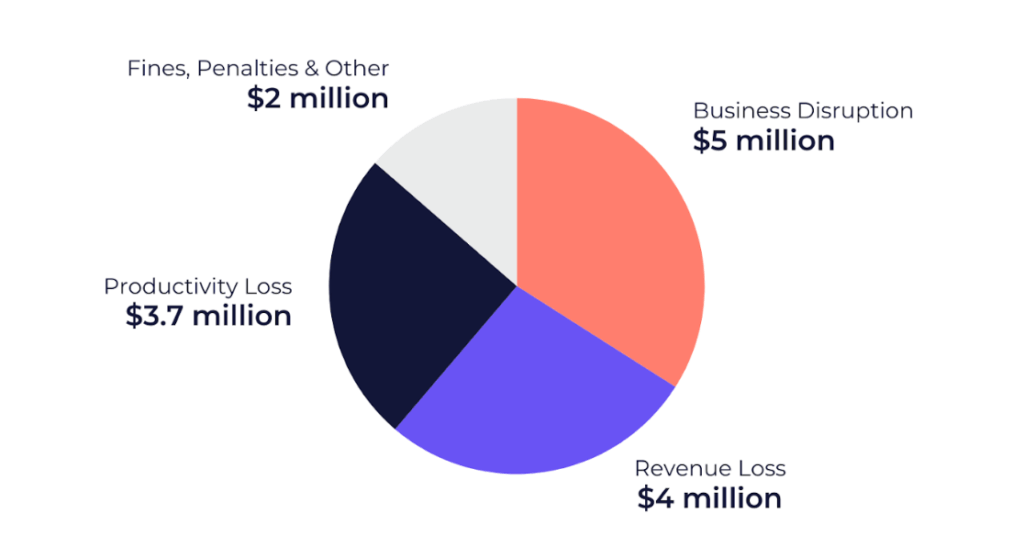
For instance, this chart highlights the costs of non-compliance, including productivity loss, revenue loss, business disruption, and penalties.
The Financial Case for Compliance
Compliance in businesses is not only about avoiding penalties; it directly impacts the bottom line. The costs of compliance vary from industry to industry. For instance, in a medium-sized tech company, compliance with data protection and privacy regulations can cost anywhere between $20,500 and $102,500.
A hardware asset management system offers:
- Cost savings through reduced asset waste and better warranty usage.
- Low overhead and improved total cost of ownership (TCO).
- Stronger protection against fines, lawsuits, and operational disruptions.
Modern HAM solutions, like Teqtivity, enable businesses to gain visibility and ensure that every device is secure, compliant, operational, optimized, and cost-effective.
How Does HAM Improve Compliance?
Compliance has become a core element of operational strategy. Regulatory scrutiny is increasing, IT environments are expanding, and remote workforces are adding new layers of complexity. Companies must now prove that every device is secure and properly recorded. That is where hardware asset management (HAM) steps in.
So, how does HAM improve compliance? The short answer is with increased visibility, control, and accountability. Let’s look at the detailed answer:
| Compliance Area | How HAM Helps | How It Benefits Businesses |
| Lifecycle Management | Tracks assets throughout their lifecycle from procurement to secure disposal. | Creates accountability, ensures compliance, and simplifies audits. |
| Asset Tracking | Provides real-time visibility and audit trails for hardware inventories. | Eliminates ghost assets, supports real-time visibility, and builds audit trust. |
| Automated Alerts | Flags warranty renewals, end-of-life, and maintenance requirements. | Prevents penalties, enables informed decisions, and reduces operational risks. |
| Compliance Reporting | Creates detailed reports with accurate records for finance and auditing. | Strengthens governance, improves TCO, and proves control during investigations. |
The table above shows the different compliance areas, how HAM helps, and its benefits to businesses.
Now let’s discuss these areas in detail:
- Lifecycle Management: To Make Compliance Traceable at Every Stage
Compliance begins the moment hardware is procured. The lack of an end-to-end view of the hardware asset lifecycle causes businesses to struggle in documenting important asset details. Thus, organizations might know where assets came from, who uses them, what condition they are in, and how they are retired.
An effective HAM process makes this easy at every stage of an asset lifecycle. Here’s how:
- Procurement: An HAM system records every device detail to ensure alignment with contracts and regulatory requirements.
- Deployment: It assigns devices to employees while maintaining accurate records of location, usage, health, and ownership.
- Maintenance: Hardware asset management systems track warranties, updates, and compliance obligations with regulatory frameworks.
- Retirement: Modern HAM solutions ensure secure retirement and data erasure to avoid disposal violations.
One of the reasons Teqtivity stands out is that it embeds compliance monitoring at every stage of asset lifecycle management. This enables organizations to ensure compliance not just during audits, but as a continuous practice. In addition, an ongoing compliance approach reduces risks while providing a defensible record of control.
- Asset Tracking: Real-time Visibility and Audit Confidence
One of the core benefits of HAM is its ability to deliver real-time asset visibility. Outdated information is unacceptable for auditors and regulators; yet, many organizations still rely on spreadsheets or disconnected systems. These tools can’t keep pace with today’s IT complexity.
Modern HAM systems help businesses with the following features:
- They monitor all assets, including laptops, servers, and peripherals, in one centralized system.
- HAM solutions eliminate shadow or ghost devices that often go unreported in hardware inventories.
- These systems provide documented audit trails that align with IT asset management (ITAM) requirements.
- They can create customizable reports that confirm assets to ensure they meet security and compliance standards.
HAM can present proof of compliance in seconds when auditors request, which boosts the leaders’ confidence in their records and helps teams make informed decisions quickly.
- Automated Alerts: One Step Ahead of Compliance Deadlines
It is important to note that compliance is not a one-time thing. It is dynamic and changes as devices age, warranties expire, policies upgrade, or regulatory updates take effect. Missing the deadlines can lead to significant penalties. However, HAM systems such as Teqtivity offer automated alerts and support integrations that can make the process swift and easy.
It provides alerts for:
- End-of-Life Dates: HAM solutions can flag end-of-life devices and trigger automated alerts. So, organizations can take proactive retirement or replacement decisions before they become non-compliant and vulnerable to security risks.
- Warranty Monitoring: Hardware asset management systems actively monitor hardware warranties to ensure devices remain covered, allowing organizations to plan timely repairs. This can avoid unexpected costs and compliance risks.
- Maintenance Schedules: Modern HAM systems closely monitor maintenance schedules. Therefore, critical updates and security patches are always applied on time, reducing vulnerabilities and improving operational reliability.
These automated alerts allow IT and compliance teams to act before smaller issues become liabilities. Moreover, they can also prevent the high incoming costs. In fact, the highest fine recorded was the £102m imposed on Standard Chartered. A structured HAM plan can prevent such costly fines and legal disputes.
- Compliance Reporting: Proof of Control Made Simple
Compliance is about control over assets and security measures. Regulators, investors, auditors, and even customers want evidence that organizations handle their technology responsibly.
Here’s how an effective HAM system, such as Teqtivity, helps:
- It provides standardized documentation for audits. So, compliance teams can quickly provide regulators and auditors with accurate, consistent reports, eliminating delays and reducing the stress of audit cycles.
- An HAM system tracks financial accountability and improves total cost of ownership (TCO) reporting. It links asset data with cost structures, which helps organizations uncover inefficiencies, reduce waste, and accurately forecast future investments.
- Hardware asset management (HAM) supports legal teams with defensible data in case of investigations. This gives organizations a reliable record of usage, maintenance, and disposal to prove due diligence.
Teqtivity does more than just satisfy regulators and auditors; it creates internal alignment between IT, finance, and compliance leaders.
Best Practices for Businesses to Ensure Compliance
Businesses must adopt some practices to improve visibility and accountability across the hardware asset lifecycle. Here are the best practices:
- Standardize Asset Intake & Assignment
Compliance starts with standardizing asset intake, tagging, and assignment policies. This way, every device is logged the moment it enters the organization. Companies should incorporate compliance checks into onboarding, offboarding, and transfer processes to ensure no device falls through the cracks.
- Improves Training & Access Controls
You should train employees and apply access controls to preserve accurate records. Thus, users can understand compliance policies, which makes it easier to integrate governance into daily operations.
- Conduct Regular Audits & Reconciliation
Organizations should reinforce compliance by conducting hardware inventory checks with digital audits. Additionally, use exception reporting to flag anomalies and address lost, stolen, or ghost assets at early stages to reduce the risk of regulatory violations.
- Eliminate Silos & Unify Data
Strategies that unify asset data across departments prevent data silos and empower leaders to make informed decisions. Hence, organizations must align hardware asset management to ensure visibility across assets throughout their lifecycle.
Remember, compliance doesn’t have to be overwhelming. Teqtivity can simplify the process with real-time visibility, automated compliance checks, audit-ready documentation, asset lifecycle management, and centralized data. So, are you ready to take compliance from a challenge to a competitive edge? Request a demo now and see how Teqtivity helps.
Key Takeaways
Before leaving, read the key takeaways from the article:
- Hardware Asset Management (HAM) ensures compliance by tracking assets throughout their lifecycle. It creates accurate records and meets the ever-changing regulatory requirements with real-time visibility.
- Non-compliance increases risks such as financial penalties, reputational damage, and legal investigations, making proactive hardware asset management an essential process for modern businesses.
- Some best practices, such as standardized intake, compliance checks during onboarding, and regular audits, help organizations reduce risks while optimizing service management and IT governance.
- Modern HAM tools, like Teqtivity, enable businesses to unify hardware inventories, automate compliance alerts, and provide audit-ready data. This improves accountability and reduces the total cost of ownership.
- It is essential to incorporate compliance into asset lifecycle management. Therefore, businesses can achieve cost savings, stronger management, and accurate decision-making.