IT Inventory Audit – Best Practices For 2025
As we kick off 2025, effective IT inventory management is becoming more critical than ever. The global IT asset management market is expected to grow significantly, reaching over USD 2,849.1 million by 2034. Therefore, accurate IT audits of inventory practices play a crucial role in driving better decision-making and achieving cost optimization.
By understanding clear visibility into asset utilization and addressing inefficiencies, businesses can identify cost-saving opportunities, manage budgets effectively, and align IT resources with their strategic objectives.
This article will explore everything you need to know about IT inventory audits, including their purpose, benefits, and best practices for conducting them for optimal results.
So, let’s start!
What is an IT Inventory Audit?
An IT inventory audit is a structured process for reviewing IT assets to ensure accuracy, compliance, and operational efficiency. This includes verifying inventory items, evaluating risks, and assessing alignment with organizational and regulatory requirements.
Key components of IT inventory auditing include:
- Collecting data through physical inventory counts or automated tracking tools.
- Ensuring everything follows industry rules and regulations.
- Identifying and fixing risks or weaknesses.
- Checking how assets are being used and their lifecycle status.
- Verifying that all records are up-to-date and accurate.
Effective audits rely on precise inventory records and analytical procedures to identify gaps, inefficiencies, and opportunities for optimization in the IT infrastructure. This can help organizations make data-driven decisions, limit financial exposure, and lower operational costs.
Why IT Inventory Audits Matter?
A comprehensive IT audit of inventory delivers several key benefits and helps organizations maintain efficiency, security, and compliance, including:
- Improved Compliance: Regular auditing procedures help align IT operations with regulatory frameworks and industry standards. By accurately tracking their inventory records, companies can avoid legal penalties and instill trust among stakeholders.
- Cost Management: Audits identify underused or redundant IT assets and help to reduce unnecessary expenses. This process can highlight wasteful spending and free up budgets for high-value investments.
- Operational Efficiency: Well-maintained inventory records can streamline IT workflows, such as faster update rollouts and enhanced disaster recovery planning. This improves productivity, mitigates risks, and minimizes downtime.
- Better Decision Making: Accurate financial records enable more informed decision-making about IT investments and resource allocation. It leads companies to improve their competitive position and achieve long-term growth.
- Improved Asset Lifecycle Management: Regular audits help identify assets’ condition and lifecycle stage. This enables companies to proactively plan for replacements and ensure that assets are not used beyond their expected lifespan.
By following effective inventory audit procedures, organizations can turn audits into opportunities for growth and operational excellence.
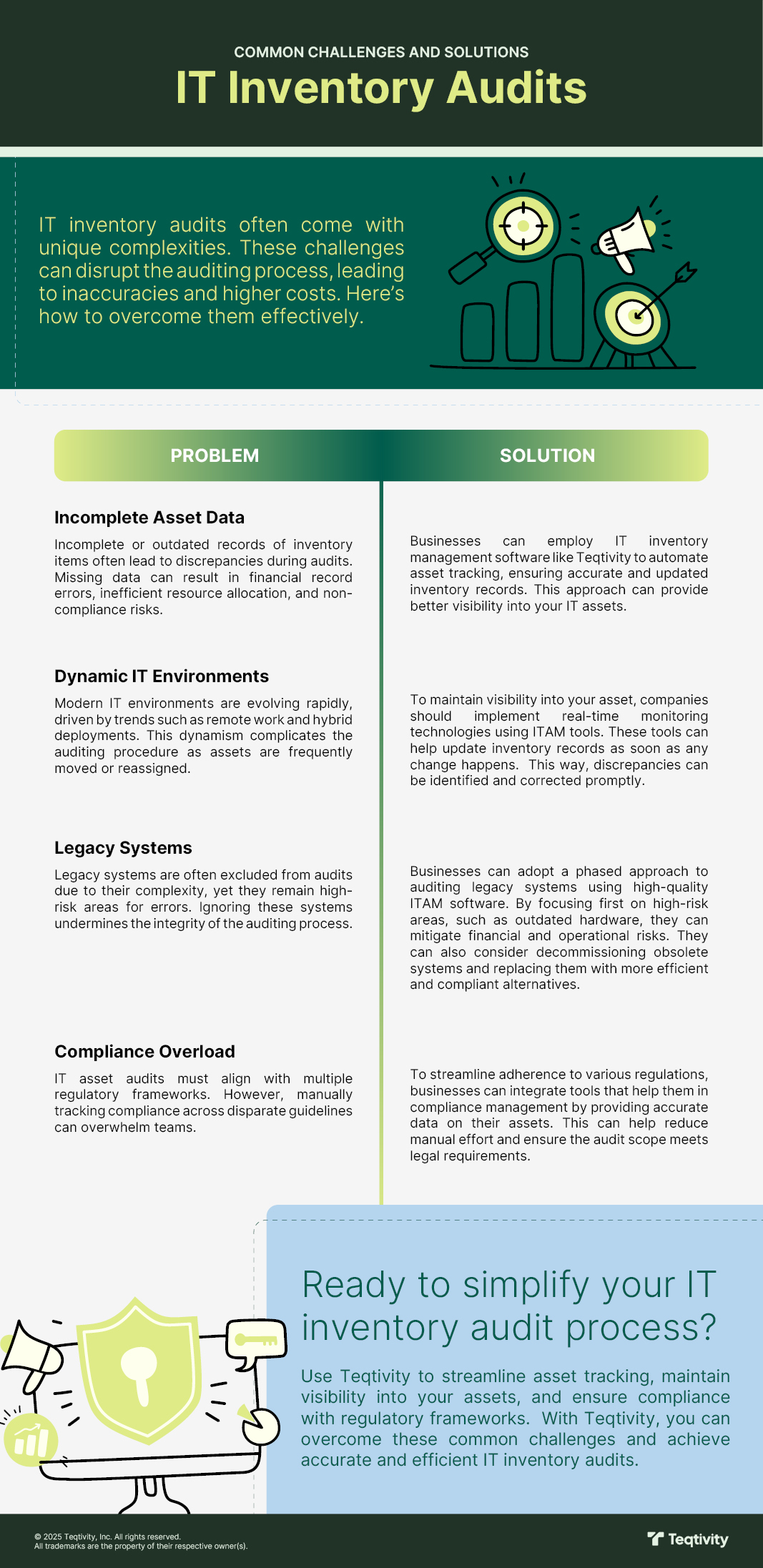
Best Practices for IT Inventory Audits in 2025
Organizations must refine their inventory auditing strategies to stay ahead in this game. Below are some best practices that offer a structured pathway to improve accuracy, reduce costs, and meet compliance goals.
Adoption of Automation Software
These days, automation software like Teqtivity is becoming a must-have tool for organizations looking to optimize their inventory audit processes. It reduces labor-intensive tasks such as cycle count tracking, discrepancy resolution, and inventory records synchronization across the asset lifecycle. Moreover, these technologies significantly minimize manual errors that often come during laborious activities and ensure a smoother auditing process.
It is said that organizations that have already adopted AI-driven solutions are projected to see a 30% reduction in time associated with manual operations by 2025.
This is because automation software uses advanced Machine Learning technologies to streamline the auditing process.
These systems can analyze large amounts of data quickly, which takes hours or days if humans do so manually. It makes the auditing process more efficient and accurate.
Focus on Real-Time Inventory Visibility
A lack of real-time oversight is also one of the primary culprits of audit inaccuracies, as outdated information often leads to reporting discrepancies and financial inefficiencies. Tools that offer many robust features like IoT-enabled sensors, cloud-based backups, and RFID technology enable organizations to maintain up-to-date data on all inventory items. This ensures accurate monitoring during critical accounting periods and prevents delays in physical inventory counts or errors in financial statements.
Moreover, real-time inventory visibility eliminates inefficiencies and enhances the accuracy of common inventory audit procedures. It equips organizations with the tools to effectively meet their compliance and operational goals.
Perform Risk-Based Auditing
Resource limitations make it impractical to audit every piece of IT equipment equally. A risk-based approach to the IT audit of inventory allows organizations to focus on high-risk areas such as legacy systems, high-value assets, and remote infrastructures. These environments often incur more significant indirect costs and present higher compliance risks.
To streamline the auditing procedure and avoid audit penalties, businesses should assign risk priority levels and conduct targeted audit trails regularly to encounter operational vulnerabilities.
This strategy reduces the likelihood of costly compliance failures and ensures efficient resource allocation while minimizing exposure to unforeseen financial risks.
Align with Regulatory Guidelines
Compliance is vital in maintaining an efficient auditing process. It helps organizations adhere to legal standards. To simplify adherence, using a tool that features compliance requirements is essential. These tools synchronize inventory records and ensure that dated practices align with modern regulations.
Moreover, incorporating asset classifications and cross-referencing them with compliance guidelines in audit workflows can detect areas of non-compliance or risk.
Therefore, aligning auditing procedures with regulatory frameworks not only helps businesses avoid legal penalties but also mitigates interruptions during operational transitions and ensures smooth compliance cycles.
Collaboration Across Departments
A successful IT inventory audit requires cohesive collaboration between IT, finance, operations, and legal teams. When audits are conducted in silos, critical data is often overlooked. To overcome this, promoting a unified approach is crucial. By bringing together different departments, organizations can ensure a comprehensive representation of their financial records and operational metrics.
One way to achieve this is by utilizing shared platforms, such as inventory management software. This software enables departments to work from a single source of truth. This not only improves internal communication but also produces reliable and actionable audit results.
With cross-functional collaboration, the entire organization can contribute towards reducing compliance risks and improving transparency in the auditing process.
Establish a Continuous Audit Cycle
The rapid pace of IT ecosystem changes requires organizations to shift from annual audits to a continuous auditing model. This approach enhances oversight of inventory items and helps businesses identify discrepancies throughout the year rather than waiting for an annual review.
Real-time monitoring systems play a crucial role in this process. By establishing a continuous audit cycle, organizations can stay on top of their inventory management and make informed decisions based on real-time data throughout the year.
8 Actionable Steps for Conducting an Effective IT Inventory Audit
To ace your IT audit of inventory, follow these straightforward steps to stay on track and achieve your goals.
Step 1: Define Objectives
Before starting an auditing process, set clear goals. This will help you to determine the key performance indicators (KPIs) you should focus on, such as identifying discrepancies in physical inventory counts or optimizing asset utilization.
Step 2: Create an Inventory Baseline
Then, establish an accurate baseline of inventory records using comprehensive asset-tracking systems. Tools like inventory management software can help you capture your asset details, enabling better oversight during the auditing process. However, it’s important to make sure that all inventory items are accounted for in this baseline, as it can serve as a starting point for future audits.
Step 3: Conduct Physical Counts
Next, perform inventory counts to verify the accuracy of your asset database. To streamline the process and minimize human error, use barcode scanners or RFID technology. Once you have completed these counts, compare them with your baseline inventory records to identify any discrepancies.
Step 4: Analyze Data
With all of the information gathered from physical counts and your baseline inventory records, conduct a detailed evaluation of the collected financial records and inventory data.
You can use many analytical procedures to examine key IT metrics such as asset utilization, lifecycle status, and compliance with software licenses. By running a finished goods cost analysis, an overhead analysis, or any ABC analysis, you can check any inefficiencies or compliance risks within your inventory.
Step 5: Implement Solutions
Based on your analysis, identify actionable outcomes. This may include decommissioning outdated hardware, reallocating underutilized resources, or addressing compliance gaps. It’s important to ensure that these solutions address the issues flagged during the auditing process while also reducing overhead costs and potentially freight costs as well.
Step 6: Utilize Technology
To streamline and automate the auditing process, consider utilizing inventory management software. With features like real-time tracking, automated reporting, and integration with other IT systems, this technology can significantly enhance accuracy and efficiency during audits.
Step 7: Audit Regularly
Establish a recurring auditing procedure cycle. By reassessing assets frequently, you can maintain accuracy and address the complexities of modern IT environments without delays. This proactive approach ensures your IT inventory audit stays aligned with changing operational needs and compliance standards.
Step 8: Ensure Compliance and Security
Throughout the auditing process, pay close attention to compliance requirements and security implications. Be sure to verify that all inventory items meet regulatory standards and that sensitive data is properly protected. Maintaining compliance with financial statement regulations and ensuring IT systems’ integrity is crucial for long-term success.
Teqtivity’s Role in IT Inventory Audits
Teqtivity’s solutions are designed to simplify asset management processes. It offers many features that empower organizations to enhance the accuracy and efficiency of IT asset tracking. Here’s how Teqtivity can support your goals:
Real-Time Asset Visibility
Teqtivity’s cloud-based system provides centralized, real-time updates on all IT assets. This increases visibility across your organization and minimizes discrepancies during inventory audits. With inventory records updated automatically, businesses can streamline their common inventory audit procedures and ensure that their critical data is always accessible for compliance with regulatory frameworks.
Automation for Accuracy
Automation is key to cutting manual errors. Teqtivity’s automated tracking tools reduce labor-intensive processes and enhance efficiency. These automated tracking and distribution tools enhance efficiency while advanced analytical procedures detect anomalies and ensure precise asset reporting. This also helps reduce overhead costs and indirect costs associated with manual processes.
Customizable Solutions
Teqtivity delivers customized ITAM solutions to meet your specific IT operational requirements. It prioritizes your IT asset records accuracy, workflow optimization, and compliance & security by adapting to your unique IT management needs.
Enhanced Security and Compliance
Security and compliance are at the heart of Teqtivity’s offerings. It achieves SOC 2 Type II compliance by supporting secure data handling and delivering features designed to align with your auditing procedures. It also offers centralized data management, which further aids inventory management software users in meeting organizational and regulatory standards efficiently.
Integrated Functionality
Teqtivity’s solutions encompass various ITAM functionalities, such as IT asset tracking, IT inventory management software, and custom reporting for IT assets. These solutions provide businesses with the capabilities to effectively manage their IT resources and maximize returns on IT investments. This is particularly beneficial for companies that deal with a high volume of assets and inventory, as it can help them optimize their workflow and reduce costs.
System Integration
Teqtivity integrates with existing IT systems relevant to asset management. Its compatibility with specific IT management tools enhances its adaptability to diverse IT ecosystems. With this efficient system integration, organizations can achieve transparent asset tracking aligned with their goals. It helps to save time and optimize operational workflows, making IT inventory audits faster and more efficient.
Strategic use of Teqtivity can help organizations gain actionable insights into their IT assets, reduce indirect costs, and ensure precise financial statements for better decision-making.
Key Takeaways
Before leaving, let’s recap the key takeaways from this article:
- IT inventory audits are essential for maintaining operational efficiency and compliance.
- The process involves tracking assets, identifying discrepancies, and implementing solutions to optimize resources.
- Regular audits optimize resource allocation, highlight cost-saving opportunities, and improve lifecycle management.
- Continuous monitoring enables businesses to address inventory challenges proactively.
- Teqtivity streamlines IT inventory management and helps organizations achieve their asset tracking goals.
Overall, with accurate and efficient IT inventory audits, businesses can ensure compliance, reduce costs, and make data-driven decisions for long-term success. So, make sure to incorporate these tips and Teqtivity’s capabilities into your IT inventory management strategies for long-term success. Request a demo today to see how Teqtivity can simplify IT asset management for your organization.