10 Best Enterprise Asset Management Software for 2025: Expert Picks & Reviews

Today, enterprises are evolving rapidly, and so is their IT asset portfolio. The large variety of modern hardware improves operational efficiency and shifts organizations into the digital landscape. However, managing these hundreds or thousands of assets can be challenging. It gets worse if you don’t have enterprise asset management software.
That said, it is equally important to choose the right enterprise asset management tool. So, which one is the best? Well, there’s no short answer, but here are 10 top options to help you find the best enterprise asset management software for your needs.
2025 EAM Market Overview & Trends
This year will see a turning point for the trends and market analyses of EAM. Today, organizations need end-to-end visibility and optimization for all physical assets more than ever. This is because of the increasing shift towards digital workplaces and advances in cloud-based platforms and automation. These features provide real-time data and visibility that go beyond outdated facility management methods and legacy systems.
A study by Open PR further supports this point, as it reported that 73% of businesses are transitioning entirely to SaaS. Moreover, they plan to increase their expenditure on IT asset management by 44%.
Enterprise asset management software industry trends further highlight the following requirements:
- Integrations for unified data
- Predictive insights for preventive maintenance
- Asset lifecycle management to maximize ROI
- Centralized inventory management for accurate data
Things may be evolving, but the goals of enterprises remain the same. They focus on reducing budget drains, increasing operational efficiency, maximizing asset life, and maintaining accurate inventory records.
Top 10 EAM Solutions In 2025
There’s no single best enterprise asset management software. Each solution brings something unique to the table and solves a specific problem. With that said, let’s explore the top 10 picks, review their key features, and see what users have to say.
- Teqtivity
Teqtivity is one of the most effective asset management tools for enterprises. It provides centralized inventory data and real-time visibility, so nothing slips through the cracks. In addition, Teqtivity equips organizations with the essential security measures to prevent unauthorized access, data breaches, and ensure compliance.
Furthermore, Teqtivity streamlines audit and inventory reviews. It provides automated alerts and detailed reporting, all of which you can track on a visual dashboard. Plus, you can set alerts for maintenance to proactively care for your equipment. You can also generate audit-ready, customized reports to maintain compliance status and prevent inventory discrepancies.
Asset lifecycle management is also easy with Teqtivity. You can track an asset’s life from its procurement to disposal to ensure its health, status, usage, and assignment. Also, you can integrate Teqtivity with your existing enterprise systems, including Asana, Jamf, Okta, Microsoft Intune, Slack, and Zendesk. This allows your enterprise to maintain unified data across all platforms.

- Pricing Mode: Fixed and user-based plans
- Free Trial: 14 days
- Freshservice
Freshservice offers real-time data across both cloud and on-premises assets. It combines features of EAM and IT asset management for automated asset discovery and preventive maintenance.
Moreover, Freshservice allows integrations with SaaS, ERP, and ITSM. The biggest benefit of Freshservice is cost reduction. It utilizes AI-driven workflows to minimize downtime and take the burden off the IT teams. It also supports compliance with automation across the entire asset life.
Freshservice also has some impressive mobile features. For example, you can track the automated workflows and access the system insights from your smartphone.

- Pricing Model: Fixed and user-based plans
- Free Trial: 14 days
- IBM Maximo
IBM Maximo is one of the most popular EAM choices. Backed by an industry-leading name, it is also one of the oldest EAM systems. However, it has managed to stay updated with its asset lifecycle management and AI integrations.
Maximo also utilizes IoT for predictive insights into an asset’s health. It connects with computerized maintenance management systems to monitor asset usage. Moreover, its active approach can help prevent unplanned downtime and extend asset life. Maximo uses IBM’s watsonx generative AI. It directly connects with an organization’s maintenance workflows and makes it easier to identify issues and optimize future plans.

- Pricing Model: Custom plans
- Free Trials: 14 days
- Oracle EAM
Oracle Enterprise is a large suite that covers various enterprise-specific solutions, including an asset management tool. Moreover, this suite contains hybrid and multicloud management, engineered systems management, database performance management, and enterprise security and compliance.
Oracle’s EAM solution focuses primarily on asset performance. It aims to ensure cost-effective operations with detailed insights into asset usage, spare parts, and inventory management. However, its key highlight is that it works effectively in both on-premise and hybrid workforces.
Oracle also provides educational material for enterprises to adopt quickly. It comes with documentation and cloud learning to smoothen your asset management processes.

- Pricing Model: Unit-based pricing
- Free Trial: 30 days
- SAP EAM
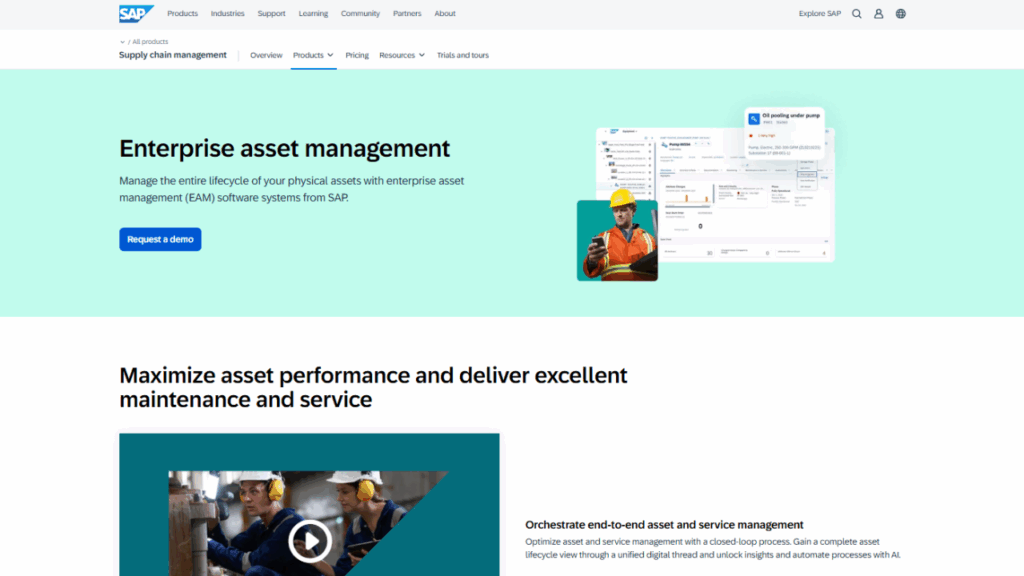
SAP Enterprise Asset Management is designed for large and complex organizations. It unifies the management of physical assets, supply chains, and facilities to streamline workflows. SAP EAM has a clear focus on sustainable operations. It utilizes risk management to extend equipment life and make organizations more sustainable through environmentally friendly disposal practices.
That said, the key highlight of SAP EAM is its mobile features. It has a mobile field service tool to streamline work orders and ensure compliance. The best part? It works seamlessly and increases collaboration between teams. SAP EAM also provides offline readiness, allowing enterprises to work without internet services.
- Pricing Model: Fixed subscription plans
- Free Trial: 14 days
- UpKeep
UpKeep provides a modern mobile experience with its dedicated mobile application. Moreover, it allows asset tracking via smartphones. UpKeep aims to reduce downtime by automating maintenance management, including setting alerts and reminders.
Plus, this EAM tool focuses on the asset lifecycle, empowering the maintenance team to optimize operations. It also improves organizational transparency with automated workflows and centralized data. You can also integrate UpKeep with ERP and IoT solutions.

- Pricing Model: Fixed and user-based plans
- Free Trial: 7 days
- IFS Cloud
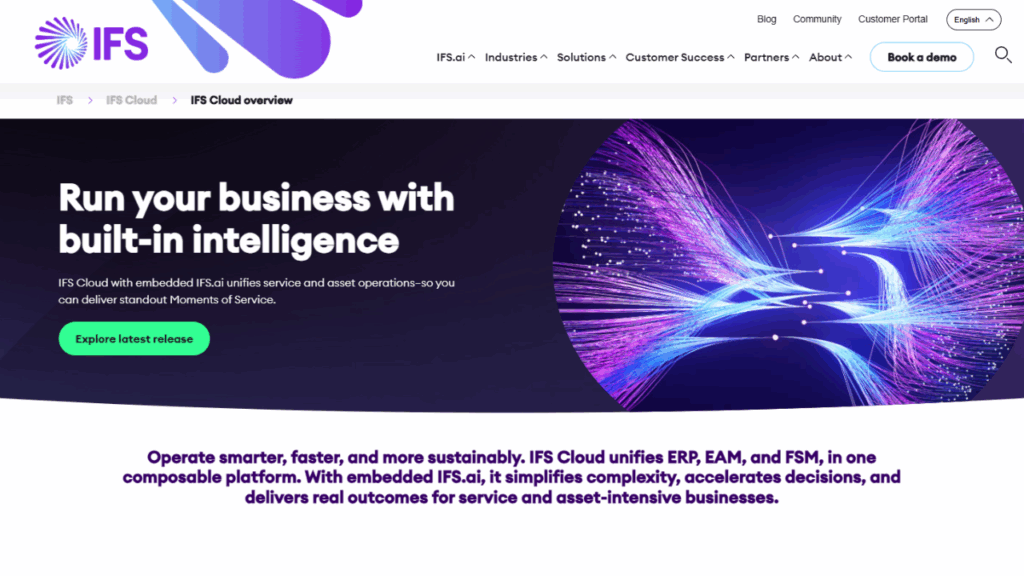
IFS Cloud is suitable for companies using heavy tech machinery. It can track all IT assets and provides industry-specific modules for warehousing, fleet, healthcare, and aviation. In addition, it understands industry-specific contexts to specialize processes, KPIs, and dashboards to specific sectors.
IFS Cloud’s user-friendly interface makes it suitable for new users to adopt quickly. Additionally, it offers detailed, real-time analytics that enable companies to make informed, data-driven decisions about predictive maintenance and repair scheduling.
- Pricing Model: Custom plans
- Free Trial: Not available
- Hexagon HxGN EAM
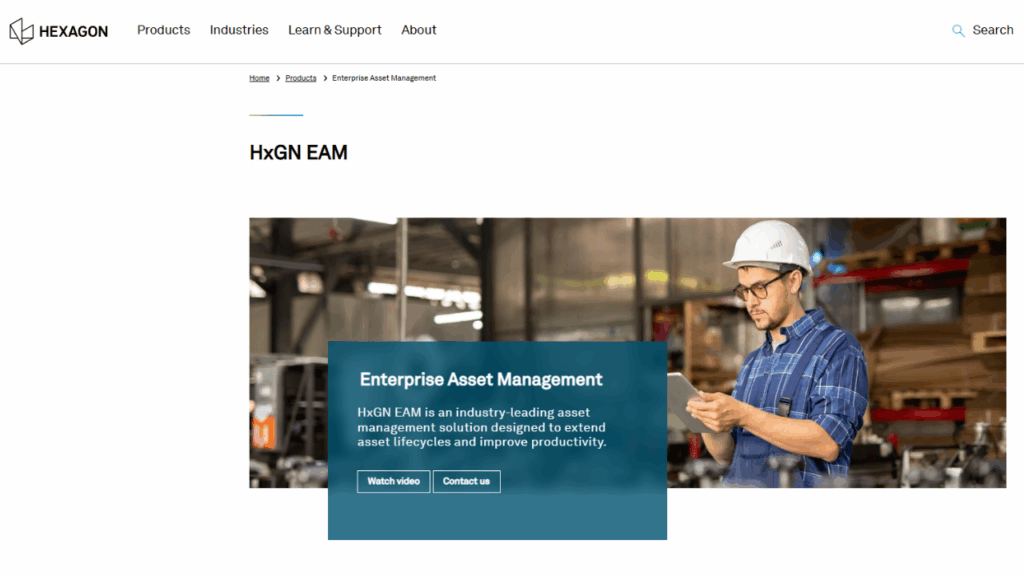
Hexagon’s HxGN platform prioritizes digital transformation by merging operational and IT asset data. So, organizations can build fully synchronized ecosystems. Its primary audience is large, asset-heavy industries that need both cloud and on-premise asset management.
Furthermore, HxGN EAM offers AI-powered analytics and compliance tools to support various workflows. It integrates seamlessly with external enterprise systems and IoT devices to track inventory, controls, spare parts, and work orders.
- Pricing Model: Custom plans
- Free Trial: Not available
- Brightly
Brightly is another popular enterprise management software with big-name partners like Pepsi and Robert Morris. It supports mobile asset tracking, enabling technicians and facility managers to access and update asset information. Furthermore, it manages maintenance schedules, work orders, and service requests to optimize planning and improve asset reliability.
Another key feature of Brightley is its performance analytics, which allow organizations to gain key insights into asset performance, maintenance costs, and overall equipment health. Brightly suits various industries, including education, manufacturing, healthcare, and senior living. Moreover, it offers dedicated solutions for government offices, such as municipalities, to centralize data, optimize financial planning, and predict future needs.

- Pricing Model: Custom plans
- Free Trial: Not available
- Limble
Limble provides complete inventory visibility and control. It helps track asset health, maintenance costs, and team performance in real time to catch issues early on. Furthermore, it supports scaling organizations with its streamlined asset management. Onboarding, compliance, and audit tracking are quite simplified with Limble.
Additionally, Limble integrates with nearly all major enterprise systems. That includes Slack, Calendars, Outlook, QuickBooks, and Okta. It makes management visible across all organizations with unified data and collaboration with vendors, suppliers, and stakeholders.

- Pricing Model: Custom plans
- Free Trial: Not available
How to Evaluate EAM Platforms
Still having trouble choosing the right enterprise asset management software? Consider the following details to shortlist your options:
- Scalability for Device Fleets
Modern EAM software must be able to handle a growing number of devices, warranties, and IT infrastructure. And it should go beyond on-site operations because hybrid and remote work environments are on the rise. Therefore, always choose a solution that can grow and adapt to your business’s changing needs and specifications.
- Customization & Workflow Flexibility
Customization is essential for two reasons. First, it takes the burden of manually personalizing reports according to your business’s demands. Secondly, customized reports can significantly help during audits and compliance monitoring.
EAM tools like Teqtivity provide customized reporting with detailed dashboards, so teams can always find their organization-specific data and insights. What helps more is workflow flexibility. It allows EAM solutions to fit into your set workflows, work within them, and optimize them, so your enterprise can reach maximum operational efficiency.
- Integration for Ecosystem Depth
Integrations have become the norm in EAM systems. Reliable enterprise management systems seamlessly integrate with a business’s existing platforms, such as MDM, ITSM, HR, and APIs. This way, organizations can prevent data silos and maintain accurate data across all platforms.
- Data Security & Compliance
Many people often overlook compliance, but it has become a growing concern. Compliance is essential for enterprises to continue operating and maintaining their reputations. Therefore, they must follow regulatory frameworks such as GDPR and SOX to implement data security, which also helps prevent cybersecurity threats.
- Reporting & Audit Tools
Organizations need real-time data and advanced analytics to make data-driven decisions. Hence, detailed reporting is a feature that must not be overlooked, especially if you want successful audits. EAM systems, such as Teqtivity, provide audit-ready documentation, allowing organizations to spend less time and resources on this specific task.
Teqtivity’s Expertise in Enterprise IT Asset Management
If you have no experience with an EAM, you might face difficulty choosing the right solution. Consider Teqtivity for these reasons:
- Teqtivity provides real-time tracking of hardware, physical assets, and warranties across multiple teams, locations, and departments. It allows enterprises to maintain data integrity and consistency throughout their records.
- This EAM solution offers asset lifecycle management, allowing businesses to proactively set maintenance schedules and reminders for repairs and replacements. This proactive approach helps prevent unexpected breakdowns and costly emergency repairs.
- Teqtivity allows you to monitor your assets’ health, usage, and assignment. Therefore, you can identify underutilized equipment and allocate resources more optimally to reduce costs.
- It connects seamlessly with HR, procurement, MDM, and other solutions to eliminate fragmented data. This way, IT teams can maintain unified data across all platforms and manage all the key metrics from a single screen.
- Teqtivity comes with essential security measures, including lock/wipe controls, incident response tools, and safe offboarding. This enables organizations to maintain their cybersecurity and comply with data regulatory frameworks.
- Lastly, Teqtivity works as an all-in-one asset management platform for several industries, including education, construction, finance, manufacturing, tech, and healthcare.
Are you ready to try Teqtivity for your enterprise asset management needs? It checks all the boxes: automation, lifecycle management, real-time visibility, integrations, compliance tools, customized reporting, dashboards, and you name it. So, book a free demo now and see Teqtivity in action.
Key Takeaways
Before leaving, read the key takeaways from the article:
- Unified data, centralization, integrations, and automation are among the most popular EAM industry trends for today’s and future markets. That is why a huge shift towards cloud systems is visible.
- Lifecycle management is one of the most important features to consider in an EAM. It enables you to track an asset’s health in its entirety, allowing you to set proactive maintenance and repair schedules to avoid unexpected breakdowns.
- Always look for security and compliance tools in an EAM. They can help you prevent cyberthreats like ransomware and data breaches. Furthermore, these tools ensure you maintain compliance to prevent legal penalties and reputational harm.
- Customization is a huge plus point for EAM systems. Tools like Teqtivity provide customized reporting, so IT teams can easily understand them and don’t have to spend hours customizing them.
- Prioritize EAM systems that integrate with the systems your organization uses. This way, you can prevent data silos and fragmentation and synchronize data from all platforms to ensure consistency.