What Is the Objective of IT Asset Management?

Smart IT asset management plays a critical role in modern businesses. Its primary objective is to monitor, manage, and maximize the value of assets throughout their lifecycle. This ensures seamless operations, cost efficiency, and compliance.
However, IT asset management is not just about inventory control; it’s about empowering businesses to operate smarter and more strategically in today’s fast-growing digital environment. Through efficient asset management, companies can make informed decisions, improve productivity, reduce costs, and gain a competitive edge.
In this article, we will explore what ITAM is, its objectives, its benefits, and the steps companies can take to implement an IT asset management program, optimizing their operations and driving growth.
What Is IT Asset Management (ITAM)?
IT asset management (ITAM) is a strategic process that manages a company’s hardware assets, software licenses, and other IT resources throughout their lifecycle. This lifecycle includes everything from procurement to retirement. Instead of seeing asset management as a one-time task, ITAM focuses on a continuous and structured approach. It helps track and manage resources effectively.
The key components of ITAM are:
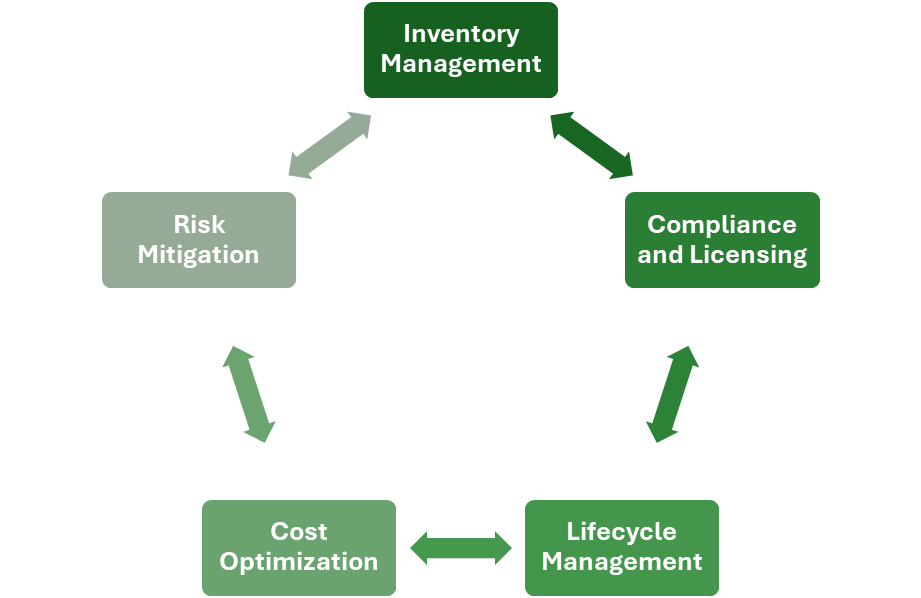
- Inventory Management: Ensures all resources are accurately tracked and accounted for.
- Compliance and Licensing: Helps organizations meet legal requirements and avoid penalties.
- Lifecycle Management: Supports better decisions for budgeting, procurement, and upgrading assets.
- Cost Optimization: Reduces unnecessary expenses and prevents underutilization of resources.
- Risk Mitigation: Ensures sensitive data is protected and assets are disposed of properly.
When implemented correctly, ITAM becomes a complete asset management process. It aligns IT resources with business goals to deliver value efficiently and responsibly.
What Is the Objective of IT Asset Management?
Without understanding the objective of ITAM, it can seem like just another bureaucratic process. Therefore, below are some key objectives of ITAM that organizations should aim to achieve:
1. Optimizing Asset Utilization
The main goal of IT asset management is to help organizations make the most of their hardware assets and software assets. This reduces waste and avoids redundancy. By implementing an effective ITAM process, businesses can see which resources are underutilized or idle. This visibility makes it easier to reallocate resources to where they are needed most.
For example, Teqtivity’s real-time tracking helps companies identify unused equipment and software. This ensures that all resources are used efficiently. As a result, organizations can get more value from their assets without spending extra on unnecessary procurement.
2. Enhancing Cost Efficiency
IT asset management plays a key role in cost efficiency by identifying and cutting unnecessary expenses. With effective asset management ITAM, businesses can lower costs by up to 30%. This is done by eliminating unused or duplicate assets and making the asset management process more efficient.
Moreover, tools like Teqtivity offer detailed reports that provide actionable insights to save costs. For example, analyzing asset data helps businesses avoid unnecessary purchases, negotiate better deals with vendors, and reduce operational overhead. Together, these efforts lead to smarter spending and improved efficiency.
3. Ensuring Compliance and Security
Maintaining regulatory compliance can be tough. This is especially true with diverse software agreements and stricter security requirements. Without a proper ITAM system, businesses face risks such as non-compliance penalties and data breaches.
Interestingly, over 45% of companies are now focusing on security integrations within ITAM platforms to solve these challenges. To help with this, Teqtivity offers a comprehensive ITAM solution. It provides complete visibility and control over your assets.
With this solution, you can track asset history, manage data backup, and ensure data security. You can also monitor statuses, legal hold status, and warranty information. This allows you to easily manage your assets and ensure compliance with regulations.
4. Supporting Strategic Decision-Making
Robust asset management systems provide decision-makers with accurate, real-time data. This helps in planning budgets, optimizing purchasing cycles, and forecasting future needs. With IT asset management, businesses get critical insights that align IT priorities with overall business objectives.
For example, Teqtivity’s customizable asset management software allows businesses to analyze data trends effectively. It helps them make proactive adjustments, ensuring that every decision improves operational efficiency and reduces risks.
Benefits of Effective IT Asset Management
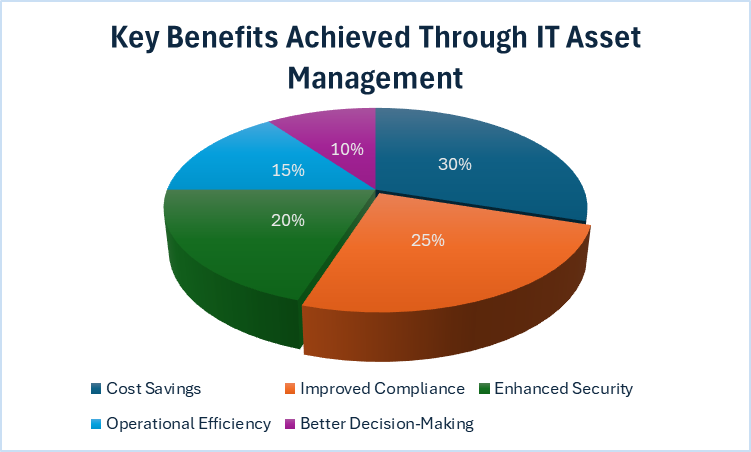
Effective IT asset management is key to driving success for modern businesses. It optimizes the use of hardware assets, helping to minimize unnecessary expenses. It also ensures that resources are aligned with organizational goals. ITAM is more than just tracking assets; it empowers businesses to improve efficiency, reduce risks, and achieve sustainable growth.
Here are the key benefits of IT asset management. It improves:
- Operational efficiency by streamlining asset management processes.
- Reduces the risk of non-compliance and data breaches, protecting the integrity of the business.
- Saves costs by eliminating redundant software licenses and underused assets.
- Enhances decision-making with real-time insights into asset data.
- Ensures better alignment between IT investments and overall business strategies.
Together, these benefits encourage a proactive approach to managing IT resources. They also help organizations prepare for long-term success. With a well-planned asset management strategy, businesses can simplify IT complexities and gain a competitive edge.
7 Steps to Develop an Effective IT Asset Management Strategy
Developing an effective IT asset management strategy involves a systematic and strategic approach. It requires thorough planning, implementation, and continuous monitoring to ensure its success. Here are seven key steps to help organizations develop an effective IT asset management strategy:
- Define Objectives
Start by identifying the primary goals of your asset management strategy and ensuring they align with your organizational priorities. For example, if the goal is to reduce costs, focus on actions like eliminating unnecessary software licenses and reallocating underutilized hardware assets. Similarly, if the aim is to ensure compliance or enhance efficiency, clearly defined objectives will help guide the ITAM process in the right direction.
By setting measurable goals that are tied to specific business outcomes, you can create a clear roadmap for success. Furthermore, using platforms like Teqtivity can help track your progress and keep your objectives at the center of decision-making and implementation.
- Create a Comprehensive Inventory
Building an accurate and centralized asset inventory is essential for effective ITAM. To achieve this, tools like Teqtivity can help you catalog all IT assets in one place.
A well-maintained inventory acts as a single source of truth that businesses can rely on to make informed decisions. It is important to include details like the asset lifecycle stage, usage data, and compliance status. With detailed records, you can reduce the risk of mismanagement and ensure assets are properly tracked. This approach sets the foundation for more efficient and cost-effective operations.
- Classify Assets
Once the inventory is complete, categorize assets by criticality, usage patterns, and risks. This helps prioritize resources that are crucial for business operations. For example, focus on high-risk assets. These include devices with sensitive data or systems critical to daily operations that need constant attention.
Moreover, this segmentation allows organizations to allocate resources more effectively. High-priority assets can get the required maintenance, while low-impact assets can be monitored periodically. With Teqtivity’s asset management system, it becomes easy to organize and track all categorized resources seamlessly.
- Implement Lifecycle Management
An effective asset management strategy requires end-to-end oversight of assets from acquisition to retirement. Lifecycle management helps ensure that each asset is used to its full potential before being retired responsibly. This process involves tracking key stages, including procurement, deployment, maintenance, and disposal.
For instance, hardware approaching the end of its life can be upgraded or replaced to avoid disruptions. Moreover, automated tools like Teqtivity make the process easier by sending timely reminders for maintenance or upgrades. This ensures that assets remain well-maintained and compliant throughout their lifecycle. As a result, risks are reduced, and efficiency is improved.
- Utilize Automation
Automation is transforming the way businesses manage IT assets. By using platforms like Teqtivity, organizations can automate essential but time-consuming tasks. These include license management, real-time tracking, and compliance reporting.
With automated workflows, manual errors are significantly reduced, saving both time and resources. In addition, advanced analytics provide actionable insights into asset data. This allows teams to focus on strategic initiatives instead of repetitive tasks.
By streamlining processes through automation, businesses can manage IT resources more effectively. They can also ensure the accuracy and reliability of the asset management process, leading to better and more informed decisions.
- Monitor Performance Continuously
Continuous monitoring helps your ITAM system stay effective and adapt to changes. With real-time tools like Teqtivity, you can easily track the performance and health of hardware assets, and compliance metrics. This consistent tracking can uncover inefficiencies, such as underutilized assets or compliance gaps.
For example, by monitoring usage patterns, you can identify unused software. This allows you to remove unnecessary licenses and reduce costs. By regularly evaluating these metrics, businesses can optimize asset performance and adjust their strategies to better handle new challenges or opportunities.
- Refine Strategy Through Feedback
A successful asset management strategy must be dynamic and adapt over time. It should evolve based on performance data and input from stakeholders. To achieve this, regularly review reports from platforms like Teqtivity to assess the effectiveness of your ITAM system.
Additionally, gather feedback from IT teams and other departments. This feedback can highlight areas that need improvement, such as license management or asset inventory tracking. By combining insights from both qualitative and quantitative data, organizations can refine their processes with precision.
As a result, your ITAM strategy will continue to deliver measurable value while staying aligned with your business objectives and evolving needs.
Which Is the Best IT Asset Management Software?
Teqtivity is the best IT asset management software for organizations looking for a reliable and efficient way to streamline their asset management process. It provides real-time updates for asset tracking, offering a Single Source of Truth. This ensures transparency and accuracy across all IT resources.
With its automated tracking and distribution features, Teqtivity eliminates manual processes by reducing errors and improving efficiency. Additionally, it is highly customizable, suitable for unique operational needs, and aligns easily with various business workflows.
To see its true value, explore testimonials from satisfied users. They share how Teqtivity saves time, enhances security, and ensures smooth integrations for their businesses.
To sum up, an efficient IT asset management system is crucial for any organization to optimize its technology investments and minimize risks. So, if you want to see how our solution can benefit your business, explore our demo now!
Key Takeaways
Before leaving, read the key takeaways of the article:
- IT asset management helps track hardware and software to make the best use of them.
- It saves money by avoiding duplicate assets and managing costs effectively.
- Compliance and security are improved by managing licenses and protecting sensitive data.
- Real-time data provides insights to make better decisions and align IT spending with business goals.
- Lifecycle management increases the value of assets and reduces risks from purchase to retirement.
- Automation and monitoring simplify processes, making them more efficient and effective.